The lights look good for an hour, then the whole display goes dark. You press the reset button and everything comes back on, only to shut off again after the next rain or heavy frost. That is a common November service call in the Kansas City area.
A tripping GFCI is inconvenient, but it is also doing an important job. The answer is not to keep resetting it, bypass it, or move the decorations to an outlet without protection. The goal is to find out whether moisture, damaged equipment, too many connections, or the home’s wiring is causing the problem.
What the GFCI is telling you
A ground fault circuit interrupter watches for electricity leaving the normal path. If current begins leaking toward the ground, the device shuts power off quickly. Outdoors, that can happen when moisture reaches a plug connection, a cord is damaged, or a decoration has an internal fault.
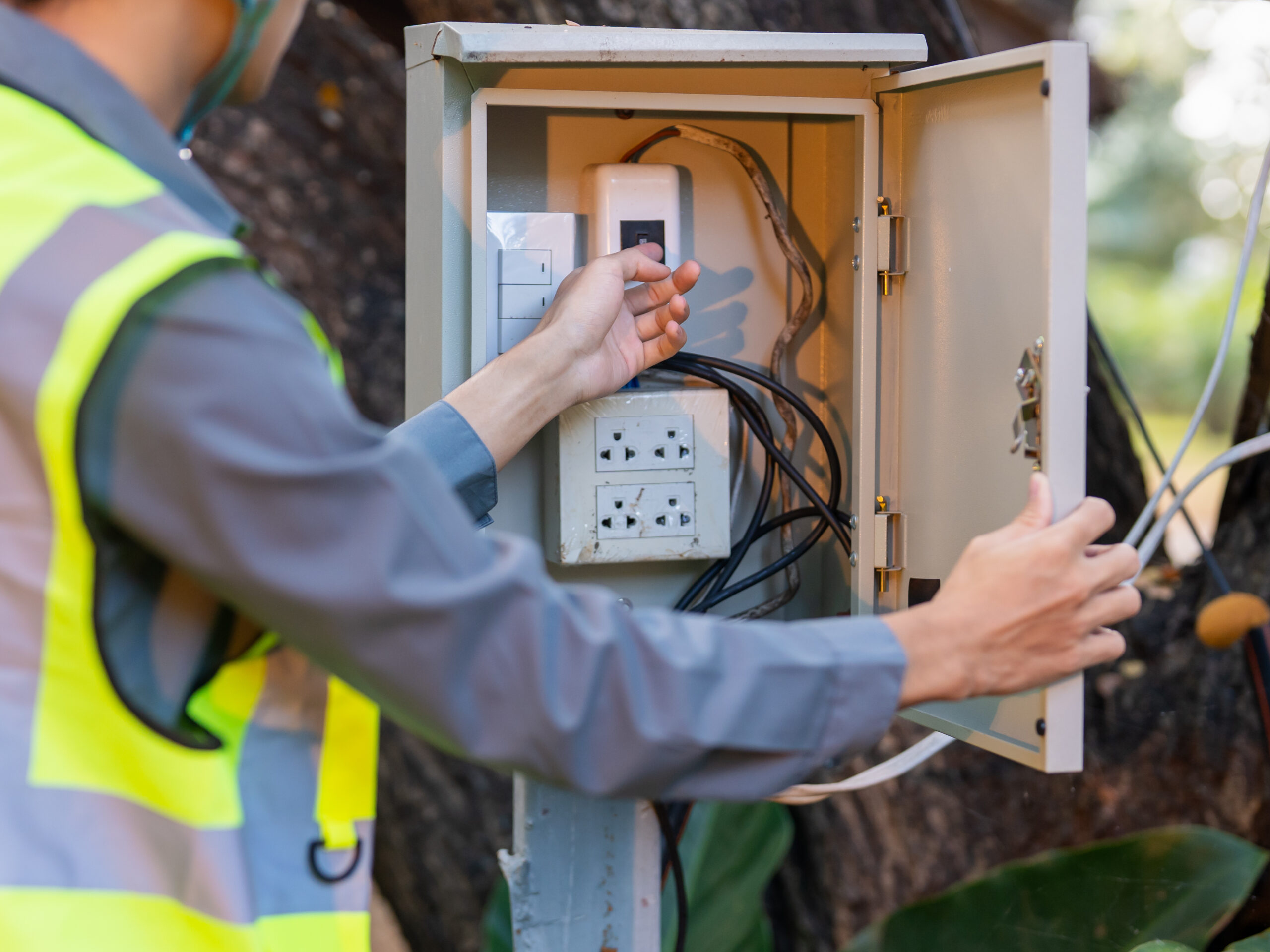
The receptacle that trips may not be the one with the reset button. One GFCI in a garage, basement, or another exterior location can protect several outlets downstream. That is why a group of outdoor outlets may stop working at the same time.
Start with the decorations and cords
Unplug the entire display before resetting anything. Inspect each light string, cord, timer, and powered decoration. Look for cracked insulation, exposed wire, loose blades, damaged sockets, scorch marks, corrosion, or a plug that feels unusually warm. Damaged equipment should be taken out of service rather than taped together and put back outside.
Confirm that every item used outdoors is marked for outdoor use. Indoor cords and decorations are not designed for the moisture and temperature changes they will see on a Kansas City porch, roofline, or yard.
Keep every connection out of standing water
Outdoor rated equipment can still trip when plug connections sit in wet mulch, melting snow, or a low spot in the yard. Keep connections elevated and use covers or connection protectors that are intended for outdoor use. Do not count on a grocery bag, sandwich bag, or a wrap of tape to make a connection weatherproof. Those shortcuts can trap moisture instead of keeping it out.
If the display works during dry weather but trips after rain, snow, or frost, moisture is a strong clue. It is not proof that the GFCI is defective.
Follow the manufacturer’s connection limits
Modern LED lights use less power than older incandescent strings, but every product still has a limit on how many sets can be connected end to end. Read the tag or instructions for the actual lights you own. Do not use an old rule of thumb for a new product, and do not assume that low wattage makes every connection acceptable.
Timers, animated decorations, inflatables, projectors, and heated accessories can add more load than the light strings themselves. If a breaker trips along with the GFCI, or a cord becomes warm, stop using the setup until the load and circuit can be checked.
Use extension cords as temporary equipment
Choose an outdoor rated extension cord that is properly sized for the connected load. Do not run cords through doors or windows where they can be pinched. Keep them away from sharp edges, vehicle traffic, and walkways where they create a trip hazard. Do not connect power strips or extension cords in a chain to reach farther across the yard.
If decorating the house requires several cords stretched from one receptacle every year, the better fix may be another properly located outdoor outlet instead of a more complicated temporary setup.